Thursday, January 25, 2018

Importance of a reading

I enjoyed this podcast, The Leader's Bookshelf, from the Art of Manliness this morning. McKay interviews retired Admiral James Stavridis about his new book by that name. Stavridis compiles a list of books leaders should read in his book. The discussion about the particular books is interesting, but more important is the take away that leaders should be readers, and that leaders should encourage their subordinates to read, and even give them lists of good books. Most senior officers I knew had some variation on a reading list they recommended to their subordinates. I don't get the sense this is as common in the civilian world as it should be. One of the really admirable things about the military was the culture of teaching that permeated every level of leadership.

Link to the podcast: https://www.artofmanliness.com/2018/01/23/leaders-reading-list/

Dr. Evil learns about inflation

I was talking to my finance class about purchasing power and inflation yesterday and used the example of Dr. Evil waking up after being frozen for 30 years and demanding a ransom of $1M to not destroy the world and being laughed at, because $1M isn't very much money (even in 1997 when the film came out). Most of them had never seen the movie. So now I am going to subject them to the clip.

https://youtu.be/cKKHSAE1gIs

Wednesday, January 24, 2018

human diagnosis project

Check out this podcast interview with Shantanu Nundy, MD, director of the non-profit arm of the Human Diagnosis Project.

https://jamanetwork.com/learning/audio-player/16121888

This is an online clearing house for primary care physicians who need advice from specialists, particularly if they have patients who cannot afford to see a specialist themselves. I love this kind of innovative use of information technology combined with altruism. This is how the culture of medicine is supposed to work.


Saturday, January 13, 2018

new course, old course

Spring classes start a week from Monday, and I have not written my syllabi yet. Luckily I only teach two classes, and only one of them is a new start. New starts are painful. You have to start from scratch, think through what you want to accomplish, what assignments would be both meaningful and instructional, fair for the level of student while at the same time pushing them to actually learn something. It's all a balancing act. And the act of putting it all down in a schedule is tedious. But that's the price you pay to have the privilege of being a teacher. 

I'm excited to take a second whack at teaching my organizational behavior course using open pedagogy. I am more confident that it is the right approach than I was when I tried it last year. This class is currently sitting at 24 - 10 more students than I had last year. I hope the larger size does not wreck the dynamics. Fourteen was intimate, and hard to hide yourself if you were not contributing. Twenty four may be pushing the limits, but we will see.

RWL Newsletter #78


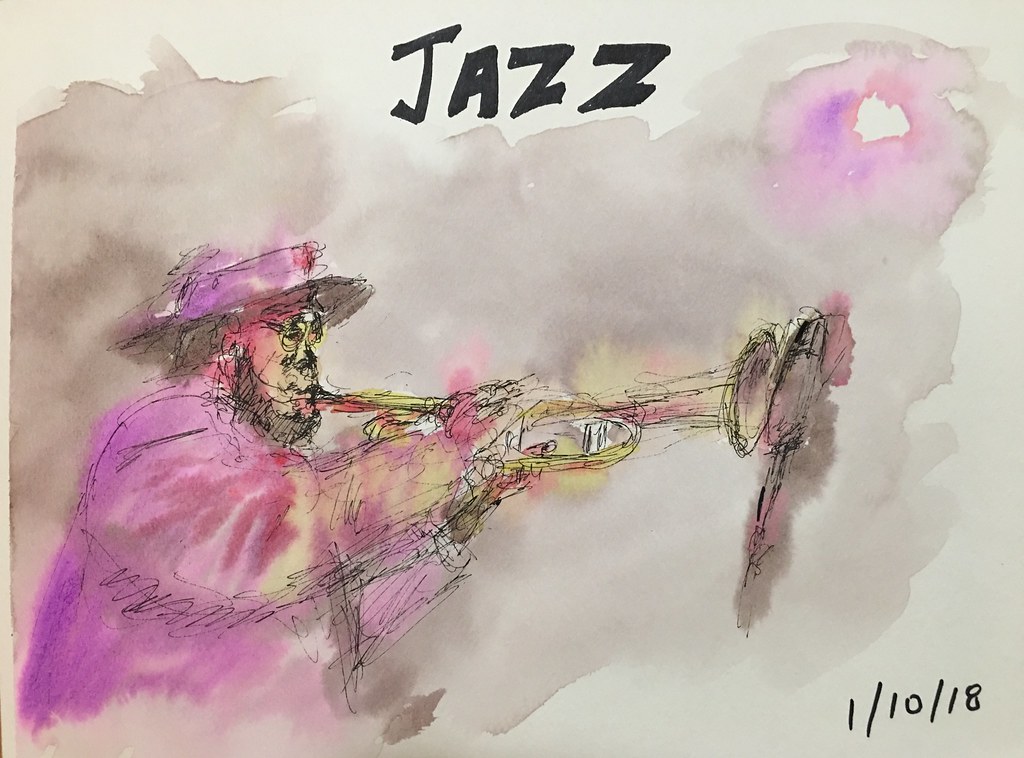
Greetings from the University of New Hampshire! I'm back in the States, at least in body. One more week to our winter break, and then we start spring semester. I'm really excited because I get to teach a new course - Finance II - which is an introduction to financial management, and even more excited that I get a second whack at teaching organizational behavior, which I intend to do using open pedagogy again. Open Ped is a bit like jazz - it's an act of teaching improvisation. I think it suits me. And I think it provides a level of realism, particularly in the field of management that is valuable. I received notice that my open pedagogy paper will be published in an upcoming issue of the Journal of Health Administration Education. I'll put a link up when it comes out. 

Read

What:
 McKinsey Quarterly, What AI can and can’t do (yet) for your business

https://www.mckinsey.com/business-functions/mckinsey-analytics/our-insights/what-ai-can-and-cant-do-yet-for-your-business

Why: I am convinced AI is going to transform healthcare in the same way as antibiotics did nearly a century ago. I think it will be a revolution in value-based care as the technology allows us to increase accuracy of diagnosis, but more importantly allows us to establish predictive models. When that will happen is still in question, but I think it is inevitable. This article is structured around the challenges to AI, so it gives some realism (in understandable English, not techno-babble) to the prediction. It is worth 10 minutes.

Watch

What:
 TED Ed, Why incompetent people think they're amazing (5 minutes)

https://youtu.be/pOLmD_WVY-E

Why: The video does a nice job explaining the "Dunning-Kruger" effect - e.g., why 88% of American adults think they are above average drivers. "Poor performers lack the expertise necessary to recognize how badly they are doing." Some good hints to fix this error - ask for feedback, keep learning. 

Listen

What: CATO Institutes, Sally Satel discusses obstacles to organ donation and donor compensation (7 minutes)

https://www.cato.org/multimedia/cato-audio/sally-satel-discusses-obstacles-organ-donation-donor-compensation

Why: Should altruism be the only legitimate motivation for organ donation? I have some emotional difficulty with the idea of a free market in organs, but it seems something is broken in the market for organs - altruism just isn't sufficient. We're still a ways from 3D printing functioning kidneys, though that is on the way. This short podcast presents a few options short of direct cash payment. What do you think?

Friday, December 22, 2017

the renewable assignment - part 2

The fall semester is officially behind us - the students have left for break, and I have submitted my grades.

In my course HMP 721, Management of a Healthcare Organization, I tried to continue my experiment with open pedagogy. I was not able to go to full open ped in this course, but I did introduce some elements of open ped, in particular the renewable assignment

What is a "renewable assignment"?
“A Disposable Assignment is any assignment about which students and faculty understand the following:
  • Students will do the work
  • Faculty will grade the work
  • Students will throw away the work
A Renewable Assignment is any assignment where:
  • Students will do the work
  • Faculty will grade the work
  • The work is inherently valuable to someone beyond the class
  • The work is openly published so those other people can find and use (5R) it”
One form that renewable assignments might take is in the form of books and textbooks.
More here.

I first learned about this concept from Robin DeRosa at UNH's sister school at Plymouth State University.

I call this "the renewable assignment - part 2" because I first tried this concept with my students last semester in HMP 722, an organizational behavior and leadership in healthcare organizations course. The students wrote a primer on organizational behavior. More about that effort here.

This semester the students wrote a primer on the management of healthcare organizations. In line with the course, the primer is more about functional divisions within healthcare organizations, rather than management and leadership, though there is some of that. This first iteration consists of 13 chapters on different topics. Next year's class will inherit their text book and develop it further - revising and adding to the original - thus making it both a resource for the next class as well as a baseline for the next class's assignment.

You can view the primer here:

https://docs.google.com/document/d/1d008oMRP5X0P46lkHwRNkxYGFDG1e5oito-0Ne2JdUU/edit?usp=sharing

I think what they have done is quite impressive, remembering this was a self-managed group of almost 50 students (juniors and seniors) who put this product together. What will be exciting is seeing what happens next year.

I would be pleased to share more about this process if you are interested. Just leave me a comment or message me directly.

RWL Newsletter #75


Greetings from the now-empty University of New Hampshire! All the students are gone and I still can't find parking. What's up with that? Sigh. Luckily I live close enough that I can walk to work. Technically today is the second day of winter, but winter seemed to have officially settled in about two weeks ago with our first two storms of the season. I took the above picture after the first storm on my walk to work. This is the Oyster River running through the back side of campus - you can see the UNH water pumping station through the branches on the right. 

Here's this week's links. No theme, but I think they are all super cool. What do you think?

PS - Merry Christmas to those of you who celebrate. Happy week to the rest!

Read

What: 
Wired Magazine, WHAT HAPPENS WHEN WE LET TECH CARE FOR OUR AGING PARENTS, by Grant Cornett

https://www.wired.com/story/digital-puppy-seniors-nursing-homes/

Why: Reading this article yesterday at the breakfast table hit me for three reasons. First, over the course of this semester, many of my students came to realize they had an interest in long term care. They are drawn to it for the opportunity to have high-touch interactions with residents and really make a difference in their lives. Their interest has piqued my own - trying to get them more exposure to what they want to learn about. Second, I just did an interview with the administrative director for telehealth services for Dartmouth-Hitchcock on Wednesday for the Health Leader Forge (look for it in January). What they do at D-H is fundamentally the same as what is being done here - except they provide a much higher level of skill. And third, this exposes more of the evolution described by Tyler Cowen in "Average is Over" - the future is not robots taking our jobs, but humans working with robots in a complementary capacity. I have to say, I really loved this article. A little bit of a tear jerker at the end.

Watch

What: 
Insider, Here's how prosthetic eyes are made (2 min)

http://www.thisisinsider.com/prosthetic-eyes-are-made-2017-10

Why: This video definitely belongs in the "this is so cool" bucket. As in, we do some really cool stuff in health care. It's fun to take a step back and look at the small miracles that we as leaders help enable.

Listen

What: The Art of Manliness Podcast, The Art of Mingling (40 minutes)

https://www.artofmanliness.com/2017/12/07/how-to-mingle-at-a-party/

Why: Last week I sent out a few links having to do with networking. This podcast goes very well with those links. In this podcast, the host interviews Jeanne Martinet, author of the book The Art of Mingling. Martinet realized at one point that most people were uncomfortable striking up casual conversations at public events like parties, or even networking events, but she was not. So she wrote a book about her techniques. I haven't read the book yet, but it's on my list now. She gives some great advice about how to read a room, start a conversation, and withdraw from a conversation to make the most of your mingling (networking) opportunities.


If you'd like to get this direct to your e-mail, you can subscribe here: https://tinyletter.com/markbonica